The student team travelled to the sandspit today to begin work on weed removal, and to gather seeds for raising. This long term project is a special one for our school and we are proud to be kaitiaki of this precious environmental gem.
Excitement and anticipation as the team gather in front of the sandspit with Teresa, Emily and Romy to begin the task of weed removal.
Mahi and Isaac removing plenty of Iceplant from the sandspit area. Those bags get very heavy boys.
Well done Neva and Emily. Digging up those larger plants is not the easiest of jobs in this heat.
Nice work Soraya, the weed pile is just about taller than you.
Teresa taking the tamariki over the sand dunes to collect seeds from the pingao.
During 2022 teachers Sarah Ross and Doris Anschober have been participating in a Hybrid Learning professional learning journey with a group of other teachers from Te Tai Tokerau. On Saturdy they presented their findings to the Ministry of Education at a hui in Bream Bay.
The Bay Academy was selected along with Bream Bay College as the only two Northland schools to receive funding to research techniques to engage with children not in school due to circumstances outside their control. This was a project designed to open the doors to the classroom and to learning for children away from school. A number of parents also contributed to the research carried out by our teachers.
The Ministry will seek to share the learning from the project widely across the schools in Te Tai Tokerau with a view to continuing to engage with a high number of children currently disengaged with their schools and learning.
We are very grateful for the dedicated work put in by Sarah and Doris in an already busy programme. Their findings and those of others in the project will serve to inform how we continue to improve the way learning is made available to students and their families into the future.
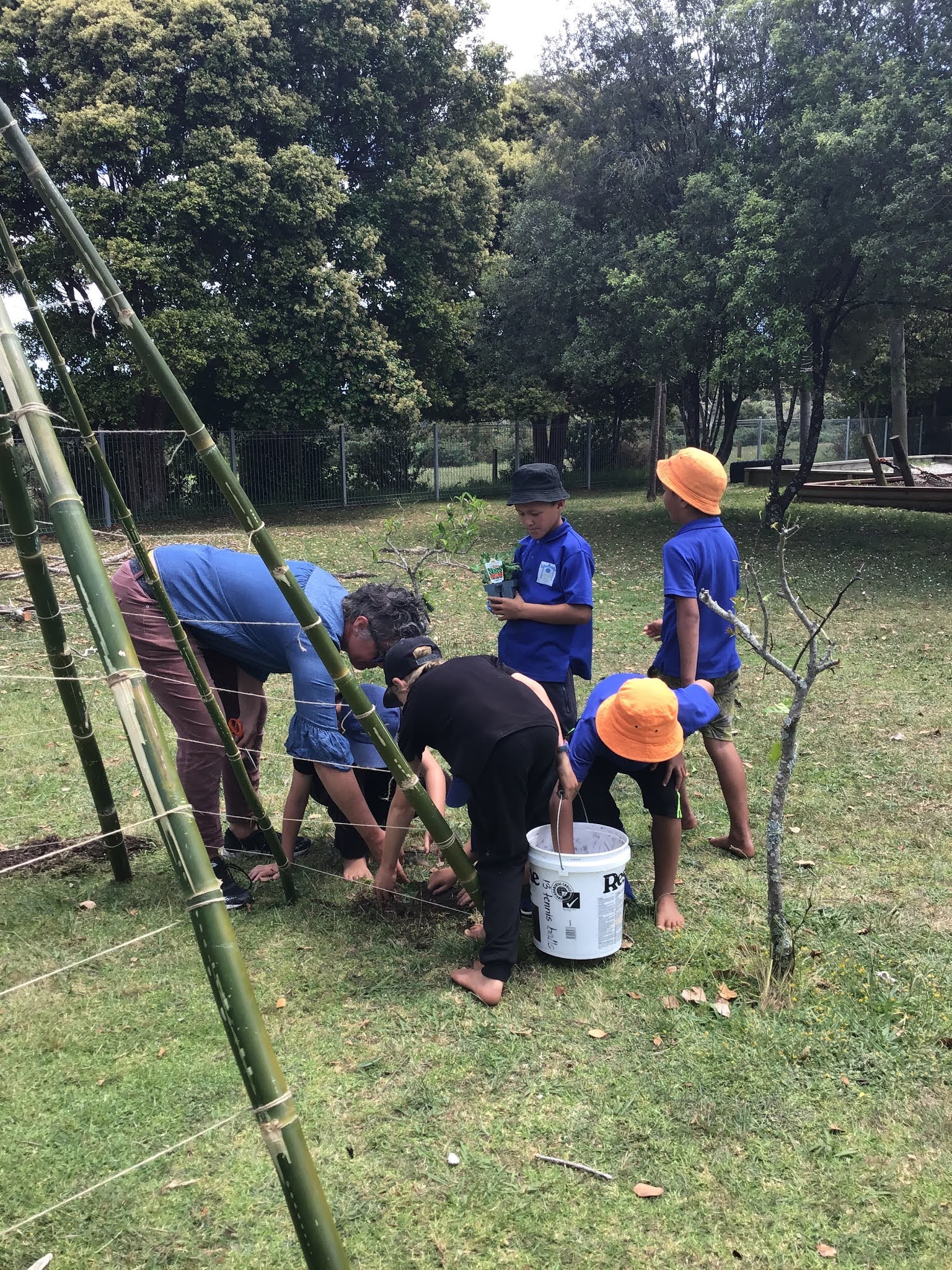
As part of their current unit of inquiry into Where we are in place and time with the Central Idea of: Homes reflect lifestyle influences and change over time, these students have initiated a project: Building a teepee at school.
Action: The boys watched a video about making a simple teepee with plants growing up on the side. They discussed where they could find a good spot for this at school and went to find the site. They also brainstormed which plants would work best at this time of the year. After that they made a list of materials they needed. They asked Matua Chris for permission to build it.
Phoenix then asked his mum Liz for help and sent her an email with the list. Liz came in and built the teepee with the boys.
Success: The team built a great teepee with peas and beans which will grow up on the side over the summer! It is fenced off at the moment to protect the plants in the growing stage.
Students from rooms 4 and 5 were given the opportunity today to watch the movie 2040. I have shared the trailer below to give you a sense of what the film is about. It also added a wonderful resource into the children's 'Sharing the Planet' units of inquiry.
Below the trailer I have shared reflections from three students in room 5. Reading these filled me with confidence for the future of our world. These young people have produced thoughtful, intelligent reflections about the impact of the film on them. I hope you enjoy.
We are also grateful to the Chandler family and Four Square Waipapa for their support in making this happen for our children. Both are showing though their actions a strong commitment to action to improve outcomes for our planet.
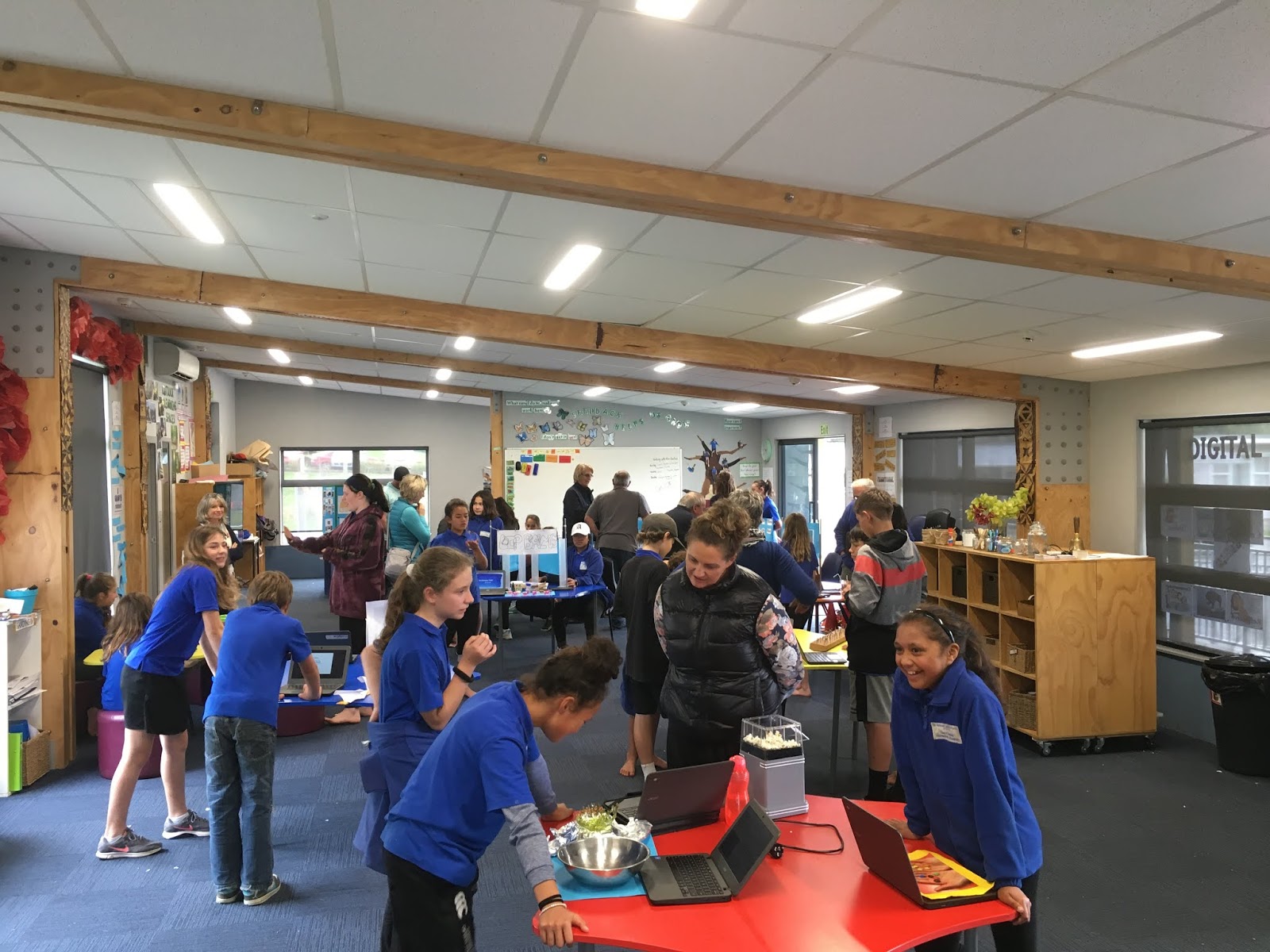
Room 5/6 recently shared their learning for their How the World Works unit of inquiry by exhibiting their science fair projects. The students chose science tests which they were interested in an conducted fair tests following the scientific process. This year we decided not to use the traditional science fair boards to show our process, data and results and instead created slideshows to present this information.
The children also included a piece of explanation writing to this to make connections between their test and the scientific facts which they witnessed. Our focus was not for the children to present information which would be read by the audience but to come up with a provocation to encourage conversations about their tests and the scientific knowledge. The students came up with imaginative ways in which to interest the audience in their work and were able to have discussions about their findings.
We had an excellent turn out of parents and whānau who came in and had lively conversations with the students about their work. I think we all were in agreement that it was a much more effective use of our time to spend more time doing science and less time crafting a display. The students also have a digital copy of the learning in a slideshow which can now be shared with a much wider audience.The student's confidence and ability to have discussions about their learning is really growing. A big thank you to everyone who came and spent time talking with all the students.
The IB Learner Profile ‘Inquirer’ encourages students to nurture curiosity and develop skills for inquiry and research. Students know how to learn independently and with others. Students learn with enthusiasm and sustain a love of learning throughout life. At the start of each inquiry teachers set a provocation to inspire and engage students in the upcoming inquiry. These provocations have ranged from a staged staff argument, a room full of materials, science experiments, to unknown suitcases turning up at the school. Children have natural curiosity and this should be the drive for learning.
Our celebration of science day last Thursday was an outstanding collection of mini inquiries, displayed by our senior students using provocations to invite us to ask questions. This process showed that students were knowledgeable about their science and also thought about how to provoke thinking in others.


.JPG)